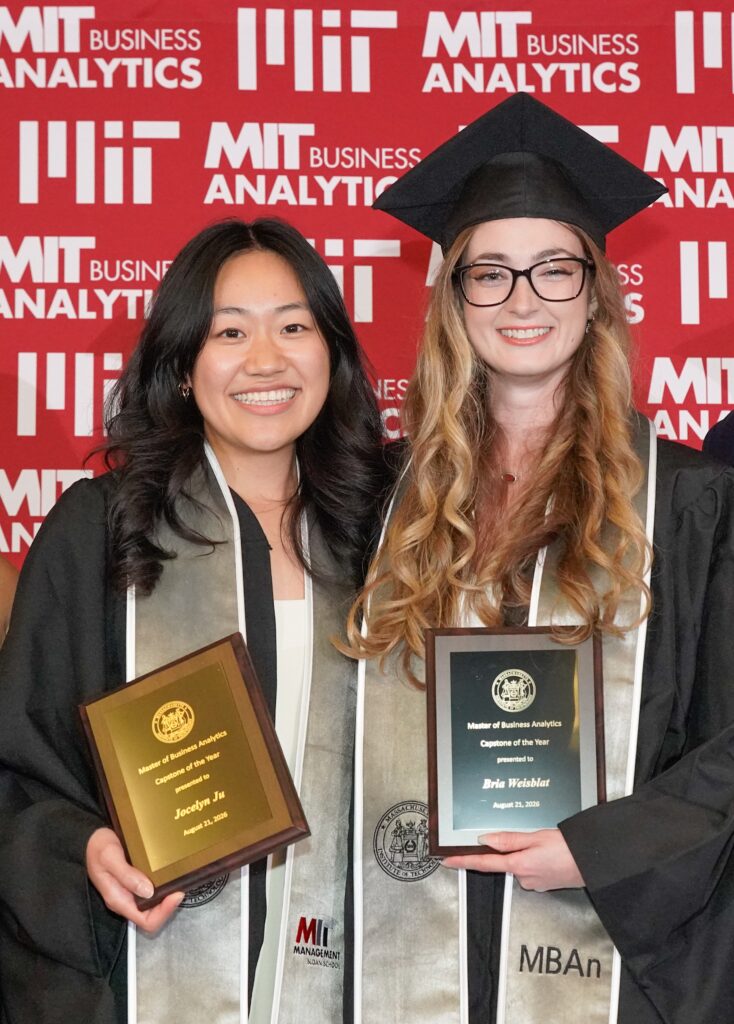
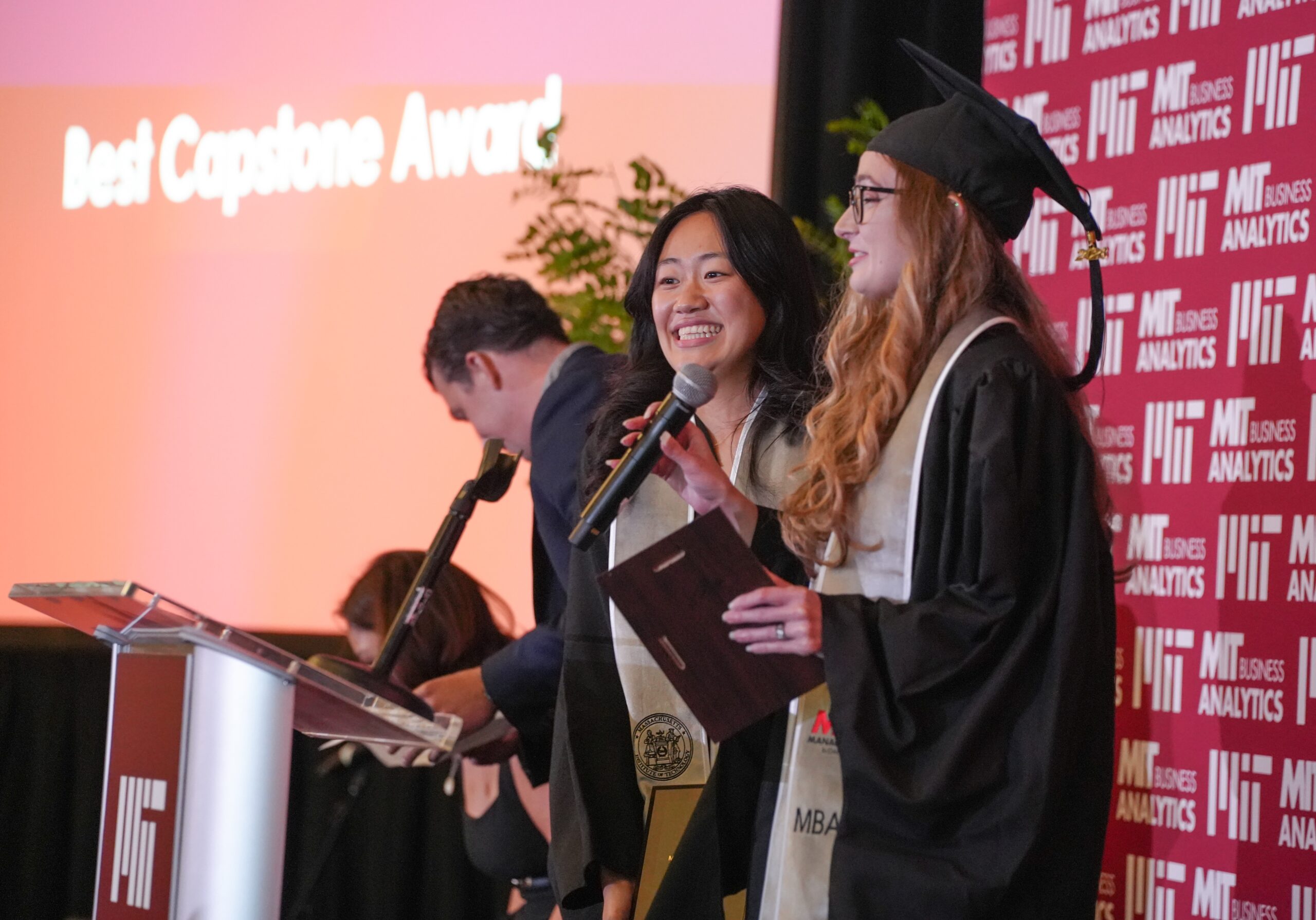
CleanSweep, a platform developed as part of this year’s Capstone Project for the Master of Business Analytics program at the MIT Sloan School of Management, with the Athanasios C. Laskaridis Charitable Foundation serving as the project host, was awarded first place among 44 teams. The project was developed by students Bria Weisblat and Jocelyn Ju, under the academic supervision of Dr. Dimitris Bertsimas, and explored how data collected through the Typhoon Project’s coastal cleanup operations can be used to improve the planning of future interventions.

As the host organization, the Athanasios C. Laskaridis Charitable Foundation provided the research team with access to the Typhoon Project’s data and operational expertise. For more than seven years, the Typhoon Project has carried out cleanup operations on remote and hard-to-reach coastlines across Greece. Each operation is systematically documented, enabling the project to build one of the largest databases on coastal pollution in the Mediterranean. Having completed an initial round of cleanups, the team now conducts repeat visits to monitor how pollution evolves over time. To date, more than 25.89 million pieces of waste, weighing over 1.13 million kilograms, have been collected and recorded across nearly 5,000 beaches.
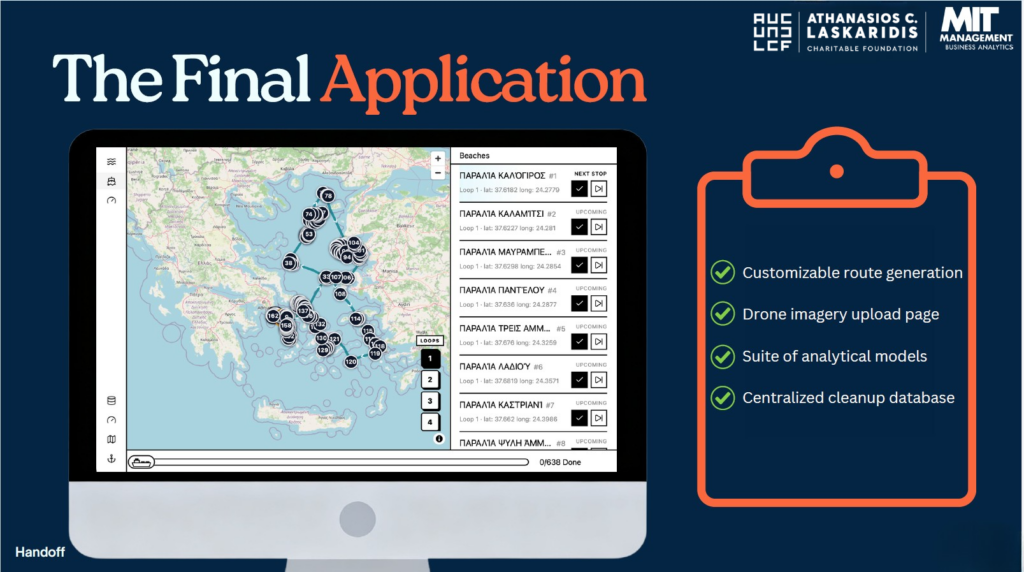
To develop CleanSweep, the team drew on the full dataset collected by the Typhoon Project over more than seven years, alongside extensive visual material. This included more than 3 TB of drone photography and video, as well as the project’s complete operational dataset. The result is a digital tool that uses artificial intelligence and analytical models to predict where waste is most likely to accumulate, supporting more effective planning of future cleanup operations.
The award-winning platform combines re-pollution forecasting models, route optimization and verification using drone imagery, creating an integrated decision-support tool for coastal pollution management.
The distinction at MIT Sloan highlights the potential of real-world environmental data to support the development of practical tools with direct applications. It also underscores the value of systematic field data collection and documentation as a foundation for research, innovation and new approaches to addressing environmental challenges. Learn more about the Typhoon Project here.